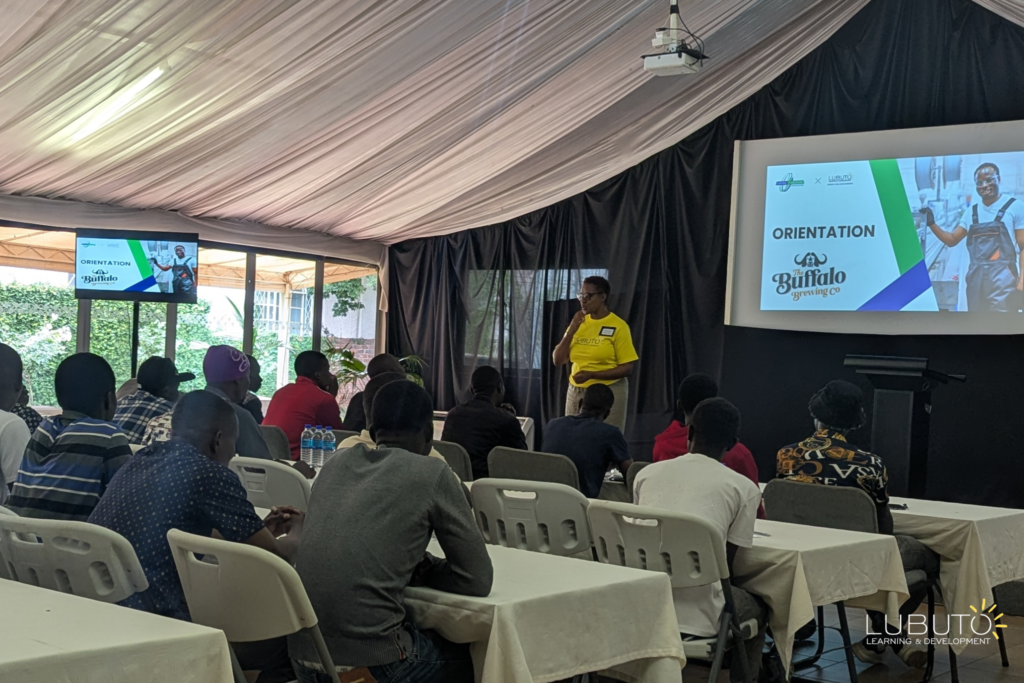


Designing for Belonging, Not Just Completion
What does it feel like to walk into a room and immediately sense that it was not designed with you in mind? Maybe the language being used assumes a level of familiarity you do not have. Maybe the examples feel distant from your reality. Maybe everyone else seems to follow the pace with ease and you are quietly working twice as hard just to keep up, while trying not to look like you are struggling. Most people have felt this at some point. And what happens next is telling. Because when people do not feel like they belong in a learning space, they do not disappear. They just stop really participating. It is easy to measure who showed up and who finished. Attendance registers and completion certificates create a tidy paper trail. But they do not tell you whether anyone genuinely engaged, whether the content connected, or whether anything will be applied once people return to their daily work. Completion is just an event. Belonging is a condition. Without the condition, the event means very little. When a learner feels seen, respected, and genuinely included, something shifts. They ask questions they would otherwise have swallowed. They engage with ideas rather than just enduring them. They take risks in discussions because the environment feels safe enough to try and even to get it wrong. It’s at this level of engagement that real learning lives. Designing for belonging starts long before anyone walks through the door. It starts with honestly asking: Who will be in this room, and what are they bringing with them? One of the ways we try to answer that question at Lubuto is through an exercise we call Kuzivana/Ukwazana, a Shona/Ndebele word meaning getting to know one another. At the start of our learning experiences, participants are invited to introduce themselves and, among other prompts, respond to a question that offers a glimpse into their personal life journey. This doesn’t need to have anything to do with their qualifications or job title. We are looking for something more human than that. What happens in that exercise, every single time, is quietly powerful. Stories surface that no attendance register would ever capture. Someone shares that education was a privilege fought for. Another mentions that they still feel like an outsider in formal learning environments. Someone reveals they are engaging in their second language and appreciates being given the space to say so. This is rooted in one of our core mantras at Lubuto: Every encounter is a sacred encounter. It is a reminder that every person in the room has a story and that story shapes how they show up, how they communicate, and how willing they are to be vulnerable in a room full of strangers. People arrive carrying vastly different backgrounds. Some will have postgraduate degrees. Others may have left formal education early, carrying quiet uncertainty about whether they are “smart enough” to be there. Some are highly confident verbal communicators. Others process deeply but need more time and a different format to express what they know. Language adds another layer, particularly in multilingual contexts where some participants are engaging in their second or third language while others are working in their mother tongue. None of these differences make anyone less capable of learning. But they do mean that a one-size approach to facilitation quietly advantages some people and marginalises others, often without anyone naming it. What Exclusion Actually Costs When people do not feel like they belong, the costs are real, even when they are invisible. The participant who never asks a question is not necessarily disengaged. They may simply not feel safe enough to reveal what they do not know. The one giving short answers in group discussions may be highly capable but has learned that their perspective is not always welcomed. The person who rates the training positively but applies nothing afterwards may have smiled through a session that never spoke to their reality. Beyond the individual, there is an organisational cost. Learning investments that do not reach everyone equally widen existing gaps rather than close them. They unintentionally reinforce who the organisation sees as worth investing in and who is simply expected to adapt and keep up. What Belonging Actually Looks Like Designing for belonging is not about lowering standards. It is about widening access to the same quality of experience. It looks like using examples that reflect the actual diversity of the people in the room. It looks like building in different ways to participate, so the person who thinks best in writing is not always disadvantaged in favour of the person most comfortable speaking aloud. It looks like pacing that allows for processing, not just covering ground. It looks like a facilitator who notices who has not spoken and creates genuine openings, and not performative ones. It also looks like naming, early in the session, that different perspectives are not just tolerated but necessary. That lived experience is a form of expertise. That there is no single “right” background for being in the room. The Shift Worth Making Organisations designing for completion ask: did they attend, and did they finish? Organisations designing for belonging ask something more demanding: did they feel seen? Did they engage fully? Did the experience meet them where they are? The second set of questions is harder to answer. But they are the ones that lead to learning that actually changes something — in people, in teams, and in the cultures we are all trying to build. Belonging is not a soft add-on to good learning design. It is the foundation of it.
Designing for Belonging, Not Just Completion Read More »